
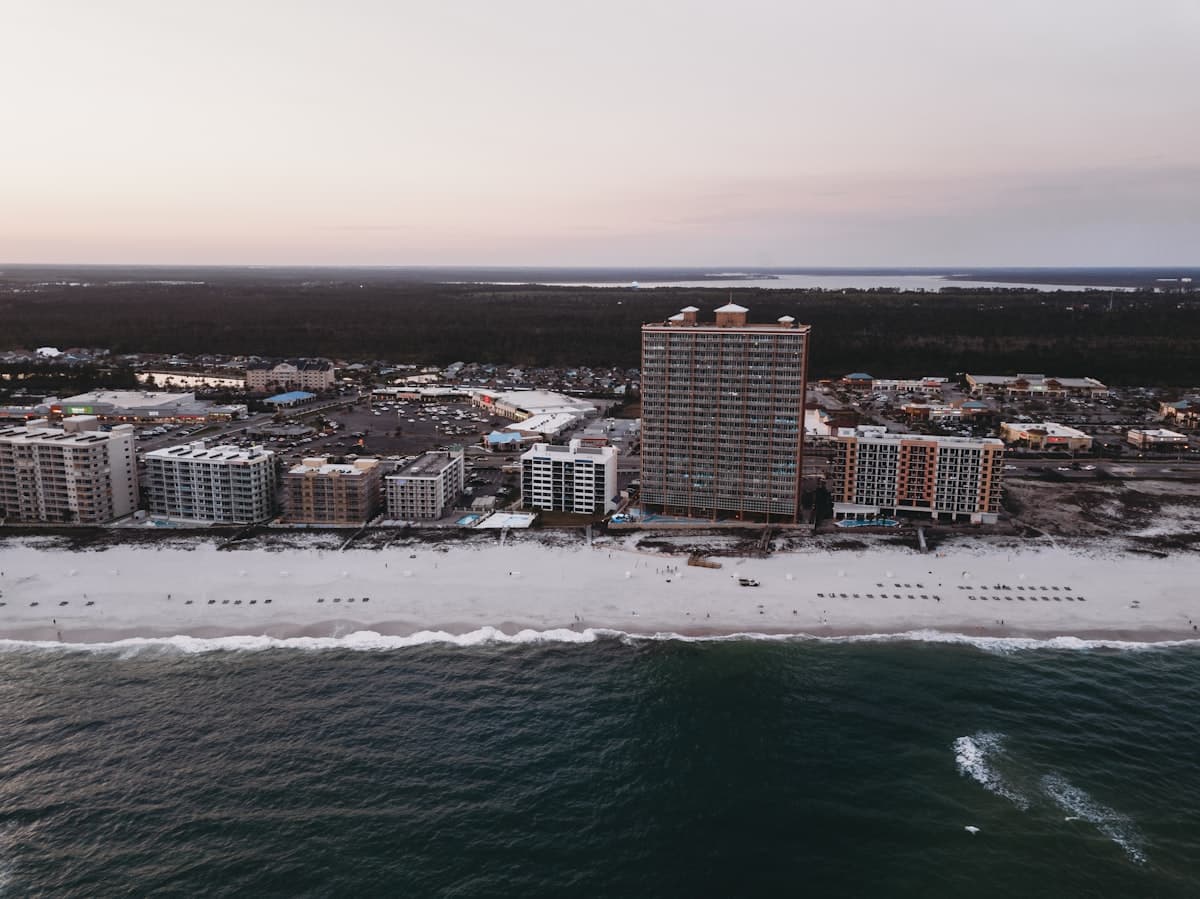
If you have been researching coastal property anywhere along the Gulf of Mexico, you already know the conversation inevitably turns to insurance. How much will it cost? Can I even get coverage? Will premiums price me out of the home I want? These are legitimate concerns, and in many Gulf Coast markets, the answers are not encouraging. But on the Alabama Gulf Coast, something different has been happening — and the numbers are starting to get national attention.
The FORTIFIED Advantage
The single biggest reason Alabama coastal homeowners pay less for insurance than their counterparts in Mississippi, Louisiana, and even parts of Florida comes down to three letters: IBHS. The Insurance Institute for Business and Home Safety developed the FORTIFIED construction standard, a set of building practices that go beyond minimum code to make homes significantly more resistant to hurricane-force winds, wind-driven rain, and hail damage.
Alabama did not just adopt the standard — the state built an entire ecosystem around it. The Strengthen Alabama Homes program, funded by the Alabama Department of Insurance, provides grants of up to 10,000 dollars for homeowners to retrofit their existing roofs to FORTIFIED specifications. Since the program launched, over 9,000 Alabama homeowners have received grants, and coastal Baldwin and Mobile counties have the highest concentration of FORTIFIED homes in the entire country.
The spring 2026 grant window opened April 7 for Mobile County and April 9 for Baldwin County. If you own a home on the Alabama coast and have not applied, this is worth your immediate attention.
What the Numbers Actually Look Like
The insurance savings from a FORTIFIED designation are not theoretical. Alabama homeowners with FORTIFIED-certified roofs typically qualify for premium discounts ranging from 20 to 55 percent on the wind portion of their policy, depending on the carrier and the certification tier achieved. On a coastal policy running 4,000 to 6,000 dollars per year, that discount can translate to 1,000 to 2,500 dollars in annual savings.
Mississippi Insurance Commissioner Mike Chaney put the cross-state comparison in stark terms earlier this year: Alabama coastal homeowners now pay 20 to 40 percent less for insurance than comparable Mississippi homeowners. The reason is straightforward — widespread mitigation through FORTIFIED construction creates a lower risk profile across the entire market, which attracts more carriers and drives competition.
That competition matters. More insurers writing policies in coastal Alabama means more options, better pricing, and less risk of the coverage gaps that plague other Gulf states.
How Alabama Compares to Florida
Florida has been the poster child for coastal insurance dysfunction for the better part of a decade, with carriers fleeing the state, premiums doubling or tripling, and Citizens Property Insurance — the state's insurer of last resort — swelling to over a million policies. The situation got bad enough that Florida passed major tort reform legislation in 2022 and 2023 to stabilize the market.
Those reforms are finally bearing fruit. Governor DeSantis announced in early 2026 that Citizens rates will decrease by 8.7 percent on average, with more than 150,000 policyholders seeing reductions of 10 percent or more. Seventeen new insurance companies have entered the Florida market since the reforms, increasing competition.
That is genuinely good news for Florida homeowners. But it also highlights how far ahead Alabama has been on this issue. While Florida was losing carriers, Alabama was attracting them through mitigation. While Florida was reforming its litigation environment after the fact, Alabama was preventing claims through better building practices. The result is that an Alabama Gulf Coast property buyer today enters a more stable, more competitive, and more affordable insurance market than a buyer in most comparable Florida coastal communities.
For buyers comparing Gulf Shores to Destin, or Orange Beach to Panama City Beach, insurance is one of the most underappreciated advantages of the Alabama side of the line.
What FORTIFIED Actually Involves
FORTIFIED is not a single standard — it is a tiered system with three levels of increasing protection:
FORTIFIED Roof is the foundation and the most common designation. It addresses the roof system, which is where the vast majority of hurricane damage begins. A FORTIFIED roof includes sealed roof decks, enhanced fastening patterns, drip edge metal, and specific requirements for how the roof covering is installed. This is the level that most grant recipients achieve, and it delivers the bulk of the insurance discount.
FORTIFIED Silver adds protection for windows, doors, and attached structures like porches and carports. It addresses the openings in the building envelope that allow wind-driven rain to enter once a storm breaches the exterior.
FORTIFIED Gold addresses the continuous load path from roof to foundation, ensuring that the entire structure is connected to resist uplift forces. This is the highest level of protection and is most commonly seen in new construction.
For existing homes, a FORTIFIED roof retrofit typically costs between 3,000 and 15,000 dollars depending on the size and condition of the existing roof. With the Strengthen Alabama Homes grant covering up to 10,000 dollars of that cost, many homeowners can achieve certification for minimal out-of-pocket expense.
What This Means for Buyers
If you are purchasing a home on the Alabama Gulf Coast, ask whether the property has a FORTIFIED designation. If it does, you will benefit from lower insurance premiums from day one. If it does not, factor the cost of a FORTIFIED retrofit into your planning — it is one of the highest-return investments you can make on a coastal property.
If you are building new construction, insist on FORTIFIED Gold. The incremental cost during construction is modest compared to retrofitting later, and the insurance savings compound every year you own the home.
And if you are comparing the Alabama Gulf Coast to other coastal markets, understand that insurance is not just another line item — it is a structural advantage that affects your total cost of ownership, your resale value, and your peace of mind during hurricane season. Alabama invested in mitigation before it was fashionable, and homeowners here are reaping the benefits.
If you have questions about insurance costs for a specific property or want to understand how FORTIFIED certification affects your buying decision, I am happy to walk through the numbers with you.