
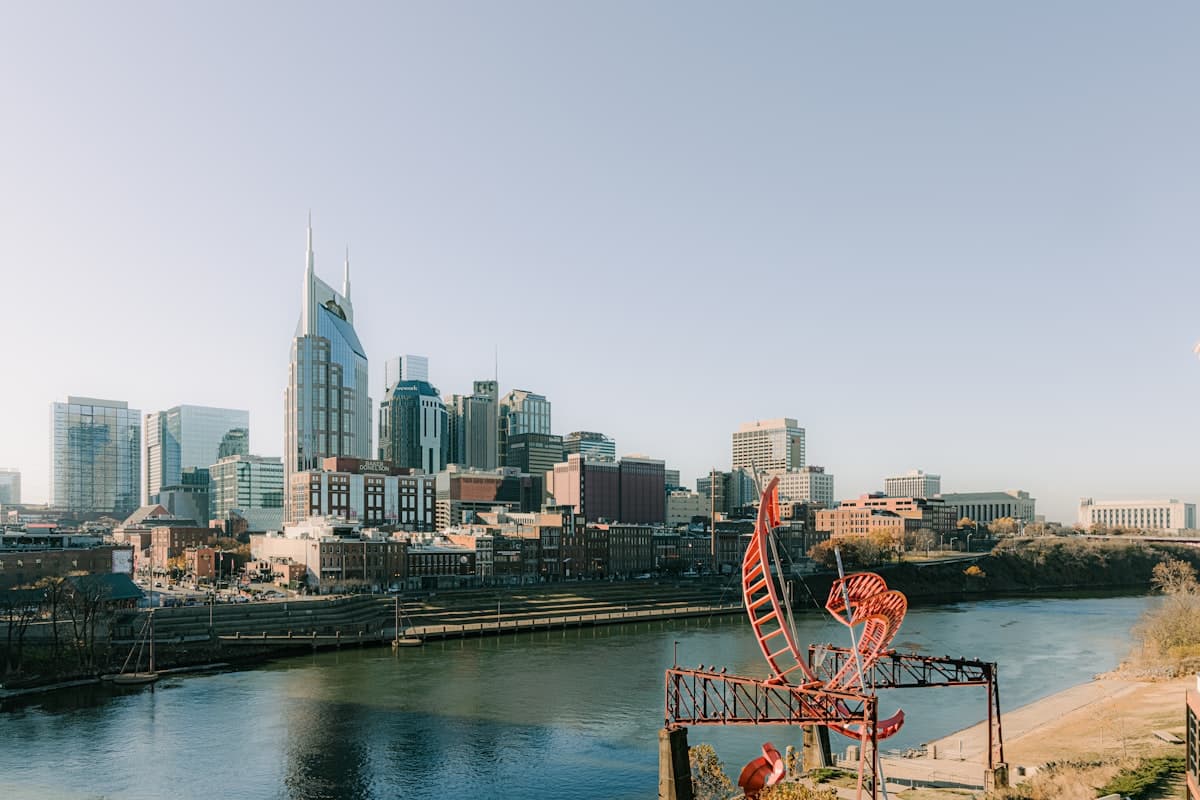
There is a reason my phone number starts with a 615 area code. Nashville has been one of the most consistent sources of new Gulf Coast residents and second-home buyers for as long as I have been in real estate, and the connection between Middle Tennessee and the Alabama Gulf Coast only gets stronger every year. If you are in Nashville and thinking about making the move to Gulf Shores, Orange Beach, or anywhere along the Baldwin County coastline, this is the guide I wish every one of my Nashville clients had before they started their search.
The Nashville-to-Gulf-Shores Corridor
The path from Nashville to the Alabama beaches is about as straightforward as a relocation route gets. Jump on I-65 South, drive roughly 470 miles, and seven hours later you are standing on sugar-white sand. It is a single interstate for most of the trip — no complicated connections, no toll roads for the majority of the drive — and that simplicity is a big part of why this corridor exists.
But driving is no longer the only option. Allegiant Air launched nonstop service between Nashville International Airport and Gulf Shores International Airport in late 2025, with flights operating twice a week. The flight is about an hour and a half, and introductory fares have been as low as 39 dollars one way. For buyers making house-hunting trips, for owners checking on rental properties, and for families splitting time between Nashville and the beach, this direct flight changes everything. No more routing through Pensacola or Mobile and driving another hour. You land three miles from the beach.
The airport itself is in the middle of a major expansion. A new 15-million-dollar terminal designed by Fentress Architects — the same firm behind Denver International — is breaking ground this summer with completion targeted for May 2027. Five additional routes are launching in May 2026, bringing the total to 18 nonstop destinations. Gulf Shores is betting heavily on air access, and Nashville is one of the anchor routes.
Cost of Living: What Your Dollar Buys
This is where the conversation gets interesting for Nashville residents. Nashville has experienced extraordinary growth over the past decade, and housing costs have kept pace. The median home price in the Nashville metro sits around 475,000 dollars as of early 2026, and in popular neighborhoods like East Nashville, Germantown, or Franklin, you are looking at well over 600,000 dollars for a modest single-family home.
Baldwin County tells a different story. The countywide median home price is approximately 372,000 dollars. In Foley, you can find well-built newer construction homes in the 280,000-to-360,000-dollar range. Gulf Shores proper runs higher — the median there is around 415,000 dollars for a single-family home — but you are getting beach proximity that simply does not exist in a landlocked city. For the price of a starter home in a Nashville suburb, you can purchase a well-appointed home minutes from the Gulf of Mexico.
Beyond housing, the day-to-day cost of living in Baldwin County runs about 5 percent below the national average. Groceries, utilities, and healthcare are near or slightly below national norms. Nashville, by contrast, has crept above the national average in most categories as the city's popularity has driven prices upward.
The Tax Picture
Both Tennessee and Alabama are income-tax-friendly states, but the details matter depending on your situation.
Tennessee has no state income tax at all — not on wages, not on retirement income, not on investment gains. It is one of the cleanest tax pictures in the country. However, Tennessee makes up for it with one of the highest combined sales tax rates in the nation, averaging about 9.6 percent when you factor in state and local rates.
Alabama does levy a state income tax on wages and salary, with rates ranging from 2 to 5 percent. But here is the key detail for retirees: Alabama does not tax Social Security benefits, and most retirement income — including pensions and distributions from retirement accounts — receives favorable treatment. If you are retiring from Nashville to the Gulf Coast, the income tax difference may be minimal or even negligible depending on your income sources.
Where Alabama wins decisively is property taxes. Alabama's effective property tax rate averages about 0.39 percent — among the lowest in the entire country. Tennessee averages around 0.75 percent, and Davidson County in Nashville comes in at roughly 0.55 percent. On a 400,000-dollar home, that difference can mean saving 1,500 dollars or more per year in property taxes alone. Over a decade, that adds up to real money.
The trade-off is insurance. Coastal properties in Baldwin County require wind and hail coverage on top of standard homeowner's insurance, and flood insurance may be required depending on your location. Total annual insurance costs for a Gulf Shores property typically run between 3,500 and 8,000 dollars. That is higher than what you would pay in Nashville, and it needs to be factored into your budget. But when you combine the property tax savings with more affordable housing, most Nashville transplants still come out ahead on monthly costs.
Neighborhoods Nashville Transplants Love
One of the first things I tell Nashville buyers is that the Gulf Coast is not one place — it is a collection of distinct communities, each with its own personality. Here is how I typically match Nashville neighborhoods to Gulf Coast equivalents:
Gulf Shores is the heart of the action and the most recognizable name. If you love the energy of Midtown Nashville — restaurants, entertainment, things to do — Gulf Shores proper gives you that beach-town version. The public beach is wide and accessible, Gulf State Park offers over 6,000 acres of trails and nature, and the dining scene has grown remarkably in recent years. Single-family homes here range from the mid-300s to well over a million for Gulf-front properties.
Orange Beach draws Nashville buyers who gravitate toward the Green Hills or Brentwood side of the city — a bit more polished, a bit more upscale. The Wharf entertainment district anchors the town with waterfront dining, concerts, a marina, and a growing retail scene. Condos and homes along Perdido Beach Boulevard tend to be newer construction with premium finishes. Expect to pay a 10-to-20-percent premium over comparable Gulf Shores properties.
Foley is the sleeper that Nashville buyers keep discovering. Think of it as the Murfreesboro of the Gulf Coast — more affordable, a bit further from the beach, but with rapid growth, new construction, excellent value, and an easy 15-minute drive to the sand. Foley's historic downtown has charm, the outlet shopping draws visitors, and the cost of entry is significantly lower. Homes in the 250,000-to-350,000-dollar range are readily available.
Perdido Beach sits right on the Florida-Alabama line and offers a quieter, more secluded coastal experience. If you are the type who prefers a cabin in Leiper's Fork over a condo on Broadway, Perdido Beach might be your speed. Beautiful stretches of undeveloped shoreline, less commercial activity, and a genuine sense of escape.
What Nashville Transplants Love — and What Surprises Them
After helping dozens of Nashville families make this move, I have learned what consistently delights people and what catches them off guard.
They love the pace. Nashville has become a big city with big-city traffic, big-city crowds, and big-city stress. The Gulf Coast operates on a fundamentally different clock. That adjustment takes about two weeks, and then nobody wants to go back.
They love the water access. Nashville has the Cumberland River and Percy Priest Lake, but it is a landlocked city. The Gulf Coast puts the ocean, the back bays, the Intracoastal Waterway, and dozens of rivers and creeks within minutes of your door. Fishing, boating, paddleboarding, and simply watching the sunset over water become part of your daily life rather than a weekend trip.
They are surprised by the healthcare. People assume a small beach town means limited medical options. Baldwin County has invested heavily in healthcare infrastructure. Baldwin Health in Foley recently completed a 200-million-dollar expansion that added a five-story patient tower, expanded surgical facilities, a dedicated women's and children's unit, and doubled ICU capacity. Thomas Hospital on the Eastern Shore broke ground on a 40-million-dollar addition in early 2025. You are not sacrificing access to quality care by leaving Nashville.
They are surprised by the schools. Gulf Shores City Schools became an independent system and has invested in new facilities and STEM programming. Baldwin County schools across the board have improved steadily, and families relocating with children have more options than they expect — including strong private school choices in Fairhope and Foley.
They are surprised by hurricane season. Not that it exists — everyone knows about hurricanes — but by how routine the preparation is. Modern building codes require hurricane-rated construction, most newer homes are built to serious wind-load standards, and the community has well-practiced storm preparation protocols. It is a manageable reality, not the constant threat that outsiders imagine.
The Buying Process from Out of State
Buying a home on the Gulf Coast from Nashville is straightforward, especially with the new direct flights making house-hunting trips easy. Here is how I typically work with Nashville buyers:
We start with a phone call to narrow down your goals — primary residence, vacation home, investment property, or some combination. I then curate a list of properties tailored to your budget and preferences so that when you visit, every showing counts.
Most Nashville buyers plan a two-day trip. We tour 6 to 10 properties across your target areas, drive the neighborhoods, and get a feel for the differences between Gulf Shores, Orange Beach, Foley, and surrounding communities. If you cannot visit in person, I do comprehensive live video walkthroughs that show you the details photos miss — the view from the balcony, the sound of the neighborhood, the actual condition of finishes and fixtures.
Alabama uses attorneys rather than title companies for closings, which is different from what many Tennessee buyers are used to. The process is smooth, and remote closings are fully supported if you cannot be here in person.
One important note: if you are financing, get pre-approved before you start looking. Nashville buyers carry strong purchasing power down here, and a pre-approval letter signals to sellers that you are serious and ready to move.
Making the Move
The Nashville-to-Gulf-Shores pipeline is real, and it is growing. Remote work has made it possible for people who once needed to be in Nashville for their careers to live wherever they want. Retirees are cashing out Nashville equity and buying Gulf Coast homes outright. Young families are choosing beach-town life over suburban sprawl. And investors from Nashville continue to see the Gulf Coast rental market as one of the strongest returns in the Southeast.
If you are sitting in Nashville right now, scrolling through Gulf Shores listings and wondering whether this move makes sense — I have had that conversation hundreds of times, and I would love to have it with you. The drive is seven hours, the flight is ninety minutes, and the lifestyle change is immeasurable.